
Planting trees enhances biodiversity, soil health and long-term land value. But when it comes to farmhouses or planned farmland communities, tree selection needs careful thought. A tree that looks beautiful today may create problems years later. Some species, though green and beneficial in many ways, can damage foundations, disturb underground water systems, compete heavily for nutrients or alter soil balance if planted too close to homes.
In farmland living, it’s not just about planting more trees, it’s about planting the right tree in the right place.
Here’s a closer look at a few species you should evaluate carefully before planting near your house.
1. Eucalyptus
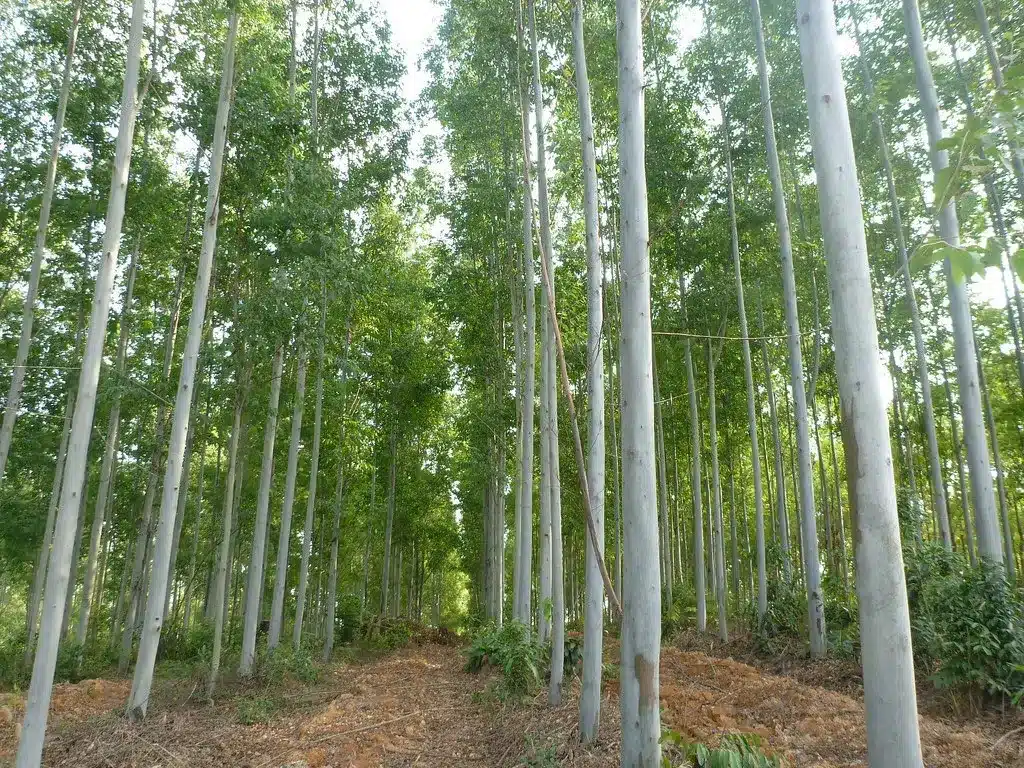
Native to Australia, Eucalyptus has been widely adopted in India for commercial forestry due to its rapid growth cycle. It can grow up to 30–55 meters tall depending on the variety and matures much faster than most hardwood species. It is often planted in large monoculture blocks for pulp, oil extraction and timber production.
Benefits:
- Fast commercial returns
- Grows well even in poor soil
- Used for essential oil and timber
- Acts as a wind barrier in large estates
The Hidden Risk:
Eucalyptus uses a large amount of groundwater because of its deep and wide root system. If planted very close to your house in farmland that depends on borewells or rainwater recharge, it can slowly reduce water availability. It also releases natural chemicals into the soil that can affect nearby crops and fruit trees. The dense canopy blocks sunlight, and the leaves decompose slowly, which means they do not improve soil fertility easily.
In several farming belts of Telangana and parts of North India, farmers have reported reduced soil moisture and crop yield when eucalyptus was planted too densely near cultivation zones.
Safe Distance Planting Guide:
- Minimum 15–20 meters away from house foundations
- At least 15 meters away from borewells and water lines
- Best planted in separate timber zones, not near orchards
2. Subabul (White Leadtree)

Subabul is a fast-growing leguminous tree native to Central America but widely naturalized in India. It grows rapidly, often reaching 15–20 meters in height, and produces abundant seed pods. It is commonly introduced in agroforestry systems for fodder and green biomass.
Benefits:
- Improves soil nitrogen
- Good livestock fodder
- Grows well in dry areas
The Hidden Risk:
Subabul spreads very fast through seeds. If planted close to your home or boundary areas, it can quickly take over open spaces. It competes heavily with fruit trees and landscaping plants for nutrients and sunlight.
Many farmland owners plant one or two trees and later find dozens of saplings growing across their plots.
Once established, removal requires constant monitoring and labour. It can disturb the planned look of curated farmland communities.
Safe Distance Planting Guide:
- Keep at least 10–12 meters away from house and landscaped areas
- Avoid planting near orchards or curated gardens
- Regular monitoring required to control spread
3. Banyan (Ficus benghalensis)
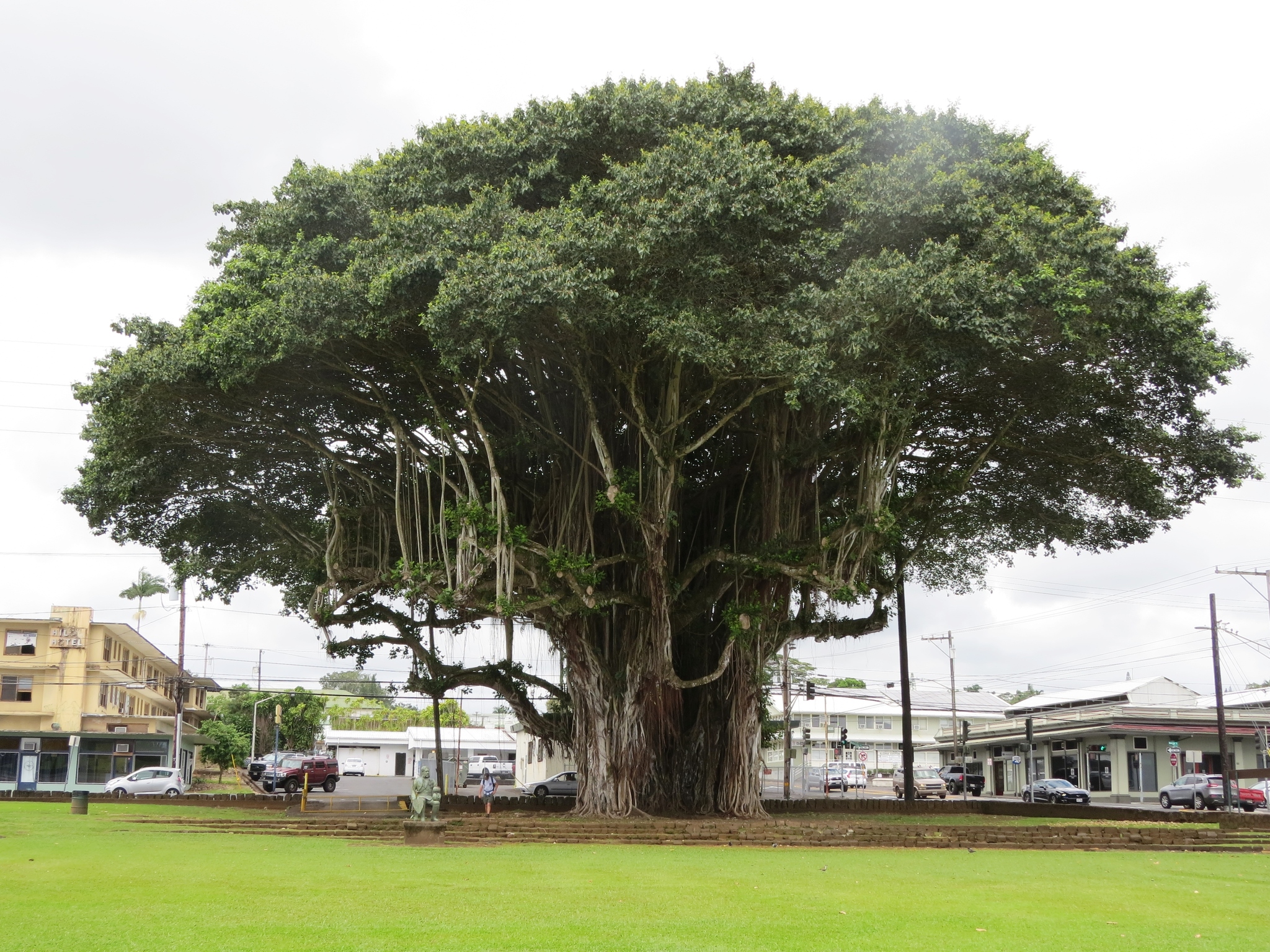
The Banyan is one of India’s most iconic and long-living native trees. It expands horizontally through aerial roots that grow into secondary trunks, allowing it to cover vast ground areas over time. It can live for hundreds of years.
Benefits:
- Excellent shade
- Supports birds and biodiversity
- Strong cultural and ecological value
The Hidden Risk:
If planted very close to your house or compound wall, Banyan can cause serious structural damage. Its roots spread wide and become thicker with time. Aerial roots drop down and form secondary trunks, expanding the tree far beyond its original planting spot.
Over time, this can lead to:
- Cracked foundations
- Lifted tiles and paving
- Damaged underground pipelines
- Broken compound walls
Across India, there are many municipal cases where Banyan and Peepal roots have grown into old building walls and caused major cracks.
Safe Distance Planting Guide:
- Minimum 25–30 meters away from any structure
- Never plant near boundary walls
- Best suited for open fields or community parks
4. Peepal (Ficus religiosa)

Peepal is a fast-growing deciduous tree deeply rooted in Indian culture and spirituality. It can reach heights of 20–30 meters and adapts to various soil conditions. It is known for its strong regenerative ability.
Benefits:
- Excellent for biodiversity
- Provides dense shade
- Highly resilient
The Hidden Risk:
Peepal seeds can germinate in tiny cracks even in walls, rooftops and drains. If planted too close to your house, its roots can enter small structural gaps and slowly widen them. Over years, this can cause serious cracks in foundations and boundary walls. Removal of a mature Peepal tree near a structure is technically difficult and expensive.
Safe Distance Planting Guide:
- At least 20–25 meters away from house foundations and construction zones
- Avoid planting along compound walls
5. Bamboo (Certain Varieties)
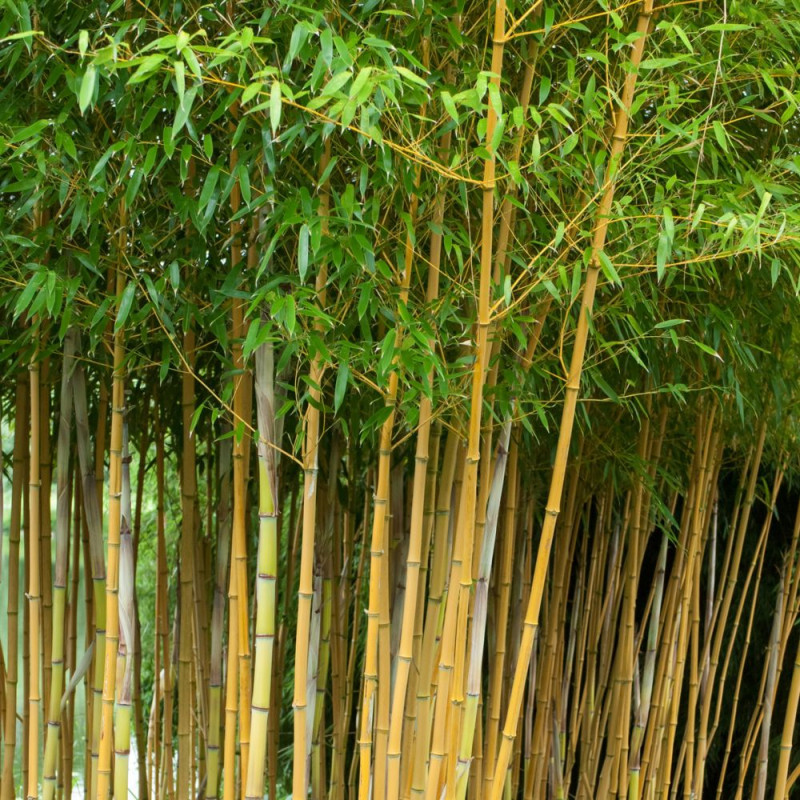
Bamboo is one of the fastest-growing plants in the world and is widely appreciated for sustainability and aesthetics. Certain varieties spread through underground rhizomes that expand horizontally.
Benefits:
- Natural green fencing
- Absorbs carbon efficiently
- Grows fast and provides privacy
The Hidden Risk:
Running bamboo varieties like Phyllostachys spread very fast underground. Their roots move sideways beneath the soil and can grow several meters away from where you planted them.
If planted too close to your house, irrigation lines, or boundary walls, they can:
- Enter neighbouring plots
- Damage pipelines
- Disturb underground wiring
- Crack paving
Once spread, they are very expensive to control.
However, clumping bamboo (such as Bambusa varieties) grows in a tight cluster. Its roots stay close to the base plant and do not spread aggressively. Clumping bamboo is much safer near farmhouses but still needs proper spacing.
Safe Distance Planting Guide:
- Running bamboo: 10–15 meters away from structures with root barrier
- Clumping bamboo: 5–8 meters away from house
- Never plant directly over pipelines
Conclusion
Before planting a large tree near your farmhouse, plan with the future in mind.
First, understand how big the tree will become. Check its mature height, canopy spread and root growth. Some trees look small today but expand heavily over time. Next, study your layout. Note the distance from your house, boundary walls, borewell, septic tank, pipelines, driveways and paved areas. Roots grow silently underground and can reach farther than expected.
At thoughtfully planned communities like Triguna Country Homes, plantation decisions are made with this long-term balance in mind, ensuring that greenery enhances both the ecosystem and the infrastructure.
Remember, farmland living is long-term. You are planning for years, not just the next monsoon. A tree’s water demand, root behavior and growth pattern matter as much as its beauty. Healthy farmland is not about planting more trees. It is about placing the right trees at the right distance.